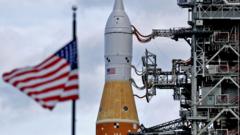
NASA announced the Artemis III crew, marking a pivotal moment in the agency's lunar exploration roadmap. The mission will serve as a critical testing ground for systems and procedures required for the subsequent Artemis IV landing scheduled for 2028.
Artemis III represents the second crewed lunar landing of the modern era. The crew will validate hardware, life-support systems, and operational protocols in the lunar environment before NASA commits to the more ambitious Artemis IV mission. This phased approach reduces risk while advancing the technical capabilities needed for sustained Moon exploration.
The Artemis program builds on the successful Artemis I uncrewed test flight and the forthcoming Artemis II crewed lunar flyby, establishing a cadence for human spaceflight beyond low Earth orbit. NASA's strategy prioritizes incremental validation of systems before deploying them for longer-duration surface operations.
Artemis III will demonstrate crew proficiency with updated lunar landers, extravehicular activities, and habitat systems. The mission also serves as preparation for Artemis IV's more extensive scientific objectives and longer surface stays. By spacing these missions across multiple years, NASA mitigates technical and safety risks while maintaining momentum in its deep space exploration agenda.
This crew announcement underscores NASA's commitment to a sustainable lunar return program. The agency faces pressure to deliver visible progress on the Moon after decades since the Apollo era, while also managing budget constraints and competing spaceflight priorities. Artemis III proves that progress is moving forward, even as the timeline extends beyond initial projections.