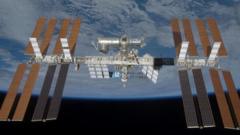
Five astronauts sheltered in their spacecraft modules while Russian cosmonauts attempted repairs on the International Space Station's Soyuz tunnel segment. The safe-haven procedure triggered when Russia's repair work on the pressurized tunnel that connects modules risked further decompression.
The ISS has battled a persistent micrometeorite-induced air leak in the Russian segment for months. Pressure losses in the tunnel area forced mission control to isolate that section and initiate containment protocols. The five crew members, from multiple space agencies, retreated to their Soyuz escape vehicles per standard procedure whenever maintenance work poses breach risks.
Russian engineers sealed off the affected tunnel section with hatch closures to prevent additional air loss during the repair attempt. The isolation strategy allowed cosmonauts to work on the breach without jeopardizing the entire station or forcing an emergency evacuation. The ISS maintains redundant systems for this reason, compartmentalizing risk across its 15 connected modules.
Astronauts returned to normal station operations after the repair work concluded. NASA and Roscosmos confirmed all crew remained safe throughout the procedure. The leak, detected in the Zarya module's service panel area, has required ongoing monitoring since its discovery earlier this year.
This marks another chapter in the ISS's operational challenges. The 25-year-old station contends with micrometeorite impacts routinely. Russian segment pressurization issues have surfaced periodically, prompting upgrades and patches over the past two years. The shelter procedure reflects standard ISS safety architecture, designed specifically for scenarios where repairs demand module isolation.
The station continues full scientific operations. Crew rotations proceed as planned, with upcoming launches scheduled from both American and Russian programs despite the recent repairs.