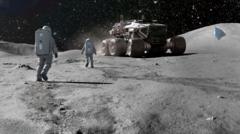
Helium-3 sits at the intersection of energy scarcity and lunar ambition. The isotope costs roughly $5,000 per gram on Earth, making it one of the planet's rarest and most valuable elements. Demand trajectories point sharply upward as industries expand applications in medical imaging, semiconductor manufacturing, and experimental fusion energy research.
The moon holds an estimated one million metric tons of helium-3 in its regolith, deposited over billions of years by solar wind. Earth's atmosphere blocks most helium-3 from reaching the surface, which explains why terrestrial supplies remain painfully thin. This supply-demand gap has triggered serious proposals from space agencies and private companies to extract lunar helium-3 and transport it back to Earth.
The economics remain speculative but tantalizing. A single lunar haul of helium-3 could theoretically fund an entire moon base operation. China and other spacefaring nations have already signaled interest in helium-3 extraction as part of their lunar exploration programs. The technical hurdles are substantial. Mining requires heating regolith to extreme temperatures, then capturing the released isotope through cryogenic separation. Transportation costs currently dwarf the material's value, though reusable rocket technology could shift that equation.
Helium-3's real appeal lies in fusion energy. If controlled fusion reactors reach commercial viability, helium-3 becomes a near-perfect fuel source. Aneutronic fusion reactions produce minimal radioactive waste, a stark contrast to deuterium-tritium fusion pathways. This future-oriented potential explains why space agencies treat lunar helium-3 not as immediate commercial venture, but as infrastructure for the next era of energy independence.
The window remains open but narrow. Early movers in lunar extraction could position themselves as energy superpowers within decades.