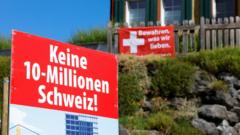
Swiss voters rejected a ballot measure that would have capped the country's population at 10 million, according to early projections showing 55% voting against the proposal. The referendum, one of several votes held across Switzerland on Sunday, reflects ongoing tension between those seeking stricter immigration controls and those favoring more open policies.
The population cap would have required automatic limits on immigration once Switzerland reached 10 million residents. The country currently sits around 8.7 million people, making the threshold achievable within the next decade under current growth patterns. Supporters argued the measure was necessary to manage housing pressures, infrastructure strain, and preserve Swiss cultural identity in the face of rapid demographic change.
Immigration remains a divisive issue in Swiss politics. Right-wing parties, particularly the Swiss People's Party, have consistently pushed for stricter border controls and population management. The rejection suggests that voters, at least in this instance, were not persuaded by arguments linking immigration directly to existential threats to the nation's stability or character.
Environmental and economic groups opposed the cap, warning it would damage Switzerland's labor market competitiveness and hamper climate initiatives requiring demographic support. Business leaders expressed concern that automation of immigration policy could create administrative chaos and harm sectors dependent on skilled foreign workers.
With votes still being tallied, the exact margin may shift slightly. However, the early trend signals that Swiss voters prefer flexibility over rigid population controls, even as housing costs and quality-of-life concerns mount in major urban centers like Zurich and Geneva. The referendum outcome reflects broader European hesitation toward hardline anti-immigration measures, despite persistent public anxiety about rapid demographic change across the continent.