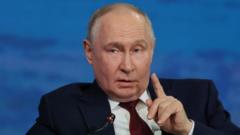
Russian President Vladimir Putin rejected direct negotiations with Ukrainian President Volodymyr Zelensky, declaring there is "no point" in a meeting to resolve the ongoing war. Putin's dismissal arrived after Zelensky published an open letter publicly calling for face-to-face talks between the two leaders.
Zelensky's letter represented a diplomatic overture aimed at breaking the negotiation stalemate that has persisted since Russia's 2022 invasion. The Ukrainian president framed direct dialogue as necessary for resolving the conflict, positioning himself as open to engagement despite nearly two years of warfare.
Putin's response signals Moscow's hardening stance. The Russian president indicated that negotiations at the presidential level lack purpose under current conditions, effectively closing the door on the type of high-level diplomacy Zelensky proposed. His refusal underscores the vast gulf separating the two nations' positions on conflict resolution.
The exchange reflects the broader diplomatic impasse in Ukraine. Russia has maintained demands for Ukrainian territorial concessions and de-escalation commitments that Kyiv has consistently rejected. Zelensky's push for direct talks suggested Ukraine hoped personal engagement might shift Moscow's approach, but Putin's rejection demonstrates Russia sees no incentive to negotiate at that level.
This moment arrives as the conflict grinds into a protracted stalemate along front lines. Both nations claim battlefield advantages, yet neither has achieved decisive military victory. The refusal of direct talks suggests international efforts to broker peace face substantial obstacles, with each side entrenched in incompatible demands regarding territorial integrity, security guarantees, and conflict resolution terms.
Putin's rejection effectively closes one potential diplomatic channel, leaving broader multilateral negotiations or intermediary efforts as the remaining paths toward eventual peace discussions.