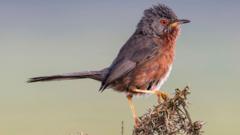
A nature reserve in Dorset has recorded its highest population of Dartford Warblers on file. The RSPB Arne site surveyed 97 breeding pairs of the small songbirds during recent fieldwork, surpassing all previous counts at the location.
Dartford Warblers are native to southern England's heathlands but faced near extinction in the UK during the 1960s, when their population plummeted to just a handful of pairs. Cold winters and habitat loss drove the species toward the brink. Conservation efforts over decades have gradually restored populations across southern England, with the birds now establishing stable breeding colonies in protected heathland reserves.
The record count at RSPB Arne reflects broader recovery trends for the species across the region. Heathland management, including controlled burning and scrub clearance, creates the open habitat these warblers need for nesting and foraging. The birds favor gorse and heather for breeding sites, making habitat restoration work essential to their survival.
The Dartford Warbler's resurgence represents a conservation success story. From a nadir of around 10 pairs nationwide in the late 1960s, the UK population now numbers in the hundreds across multiple reserves and private lands. The species remains vulnerable to harsh winters, which can devastate numbers in a single season. Climate change and shifting weather patterns add ongoing uncertainty to their long-term prospects.
RSPB Arne, a 1,100-hectare reserve on the Dorset coast, serves as a critical breeding ground for this and other heathland species. The 97 pairs recorded there demonstrate the value of protected spaces and active management for endangered birds. The finding gives conservationists tangible proof that dedicated restoration work pays dividends.