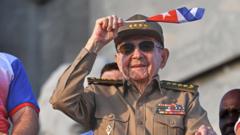
The US Justice Department indicted Raúl Castro on murder charges, drawing swift condemnation from Russia and China. The move marks an escalation in Washington's legal pressure against Cuba's former leader, who stepped down from power in 2018 but remains influential in the island nation's politics.
Russian and Chinese officials framed the indictment as political persecution and an infringement on Cuban sovereignty. Both countries view the action as part of a broader pattern of US hostility toward nations outside its sphere of influence. The timing reflects broader geopolitical tensions, with Russia and China increasingly aligning against Western policies they deem interventionist.
The indictment carries symbolic weight beyond legal consequence. Castro, now in his nineties, is unlikely to face trial on US soil. Instead, the charges serve as a statement of principle from Washington regarding alleged human rights abuses during his tenure. The specific murder allegations connect to deaths occurring during the Cuban Revolution and subsequent decades of Castro family rule.
Cuba's government dismissed the indictment as baseless and motivated by decades-old US animus toward the communist state. The regime pointed to the longstanding US embargo and decades of failed regime-change efforts as evidence of Washington's ideological opposition rather than genuine legal concerns.
For the Biden administration, the move satisfies hardline Cuban-American constituencies, particularly in Florida, ahead of the 2024 election. However, it signals no shift in broader Cuba policy, which has remained largely frozen since the Trump administration reversed Obama-era rapprochement.
The indictment demonstrates how criminal justice systems become tools of geopolitical messaging. Russia and China's reaction confirms they view US legal actions against foreign leaders as political theater designed to project American power. The statement underscores deepening fault lines between the West and authoritarian powers competing for influence globally.