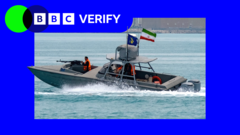
Iran released a map asserting control over more than 22,000 square kilometers of the Strait of Hormuz, claiming "armed forces oversight" across the critical shipping lane. The move escalates Tehran's territorial assertions in one of the world's most strategically vital waterways, through which roughly one-third of global maritime oil trade passes.
The map represents Iran's most explicit recent claim to dominance over the strait, which separates Iran from Oman. This assertion comes amid heightened tensions between Iran and Western powers, particularly the United States, over Tehran's nuclear program and regional military activities.
The Strait of Hormuz remains one of geopolitics' most contested zones. Iran has repeatedly threatened to close or restrict passage through the waterway during periods of escalation with the US and its allies. In recent years, Iran's Islamic Revolutionary Guard Corps has seized foreign vessels, launched drones, and engaged in confrontations with naval forces operating in the region.
The international community, led by the US Navy, has consistently rejected Iran's territorial claims beyond its recognized boundaries. The Strait of Hormuz operates under international maritime law, allowing free passage through international waters. Any Iranian attempt to enforce a broader control zone would directly challenge this framework and threaten global oil supplies.
This escalation signals Iran's willingness to weaponize its geographic position as leverage in broader geopolitical disputes. The timing coincides with ongoing tensions over the Joint Comprehensive Plan of Action, the nuclear deal from which the US withdrew in 2018. Iran's assertion also reflects domestic political considerations and efforts to project regional power amid economic pressures and international isolation.