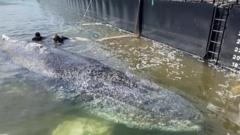
A large whale stranded on a Danish island will be removed after a German rescue operation failed to save the animal. Danish authorities plan to conduct a post-mortem examination on the creature, which was released into the sea from a barge over two weeks ago but apparently returned to shallow waters.
The failed rescue effort highlights the challenges wildlife officials face when attempting to relocate distressed marine mammals. The whale had been held on the barge as part of the German rescue attempt, but the animal's return to the island suggests the operation did not achieve its intended outcome. Rather than risk further stress to the whale or prolong its condition, Danish officials decided removal and examination were the appropriate next steps.
Post-mortem analysis will help determine what caused the whale to strand and why the relocation effort proved unsuccessful. Such examinations provide valuable data for marine biologists studying whale behavior and health, particularly in cases where animals show unusual patterns like repeated stranding. The findings may inform future rescue protocols for similar situations across Northern European waters.
Whale strandings occur periodically across the North Sea and Baltic regions, though mass strandings receive more public attention. Individual animals typically strand due to illness, injury, disorientation, or pursuit by predators. The extended timeline of this case, with rescue efforts spanning more than two weeks, indicates the complexity of intervention efforts and the physical toll such situations place on the animals involved.