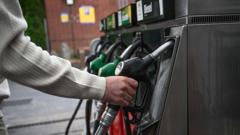
Britain has diluted newly proposed Russian oil sanctions in response to surging fuel prices and supply chain disruptions. The government's decision reflects mounting pressure from rising energy costs coupled with geopolitical volatility in the Middle East, where the Strait of Hormuz blockade threatens global petroleum flows.
The UK's retreat marks a shift in its hardline stance against Moscow following Russia's invasion of Ukraine. Ministers now prioritize domestic fuel affordability over aggressive oil-sector penalties, a calculation that underscores how interconnected energy markets can constrain foreign policy leverage.
Supply concerns dominate the equation. The effective blockade of the Strait of Hormuz, a critical chokepoint for roughly one-third of seaborne traded oil, has tightened global crude availability. Any additional restrictions on Russian oil exports would further compress supplies, pushing petrol and diesel prices higher at the pump. With inflation already biting households and businesses, the government faces political blowback if energy costs spike further.
This represents a pragmatic retreat from the unified Western sanctions framework established after Russia's 2022 invasion. While the US and EU have maintained aggressive postures on Russian energy imports, Britain's move acknowledges that geopolitical isolation carries real economic costs. Energy markets punish uncertainty and supply loss indiscriminately.
The calculation exposes a tension within sanctions strategy. Pressure on Russia's revenue must balance against collateral damage to allies' economies. As Middle East tensions persist and crude supplies tighten globally, policymakers accept that total decoupling from Russian energy remains economically untenable in the near term. Britain's watered-down approach reflects this hard reality.