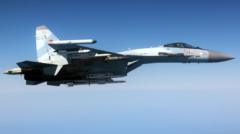
Russian fighter jets conducted dangerous intercepts of a British RAF Rivet Joint surveillance aircraft over the Black Sea, the UK Ministry of Defence confirmed. The unarmed reconnaissance plane was flying a routine international mission when Russian jets made the intercepts in what British officials characterized as reckless flying.
The Rivet Joint is a heavily modified Boeing 707 equipped with advanced signals intelligence gathering systems. RAF aircraft regularly patrol international airspace over the Black Sea to monitor military activity in the region. These flights operate within legal international boundaries, though they frequently draw aggressive responses from Russian pilots.
The incident reflects escalating tensions between NATO and Russia since the 2022 invasion of Ukraine. Russian military operations in the region remain elevated, and intercepts of Western intelligence aircraft have increased as Moscow seeks to intimidate NATO reconnaissance efforts. The Black Sea has become a flashpoint for close-quarters aerial encounters between Russian and Western forces.
The RAF has not disclosed specific details about how close the Russian jets came to the British aircraft or whether any weapons were locked onto the surveillance plane. British defense officials stressed that such intercepts represent unsafe flying practices that violate international aviation protocols and create collision hazards.
These incidents occur regularly along NATO's eastern frontier. Russian pilots have a documented history of conducting aggressive intercepts of Western military aircraft, sometimes with minimal separation distances. The practice serves both as a show of force and an attempt to disrupt intelligence-gathering operations that monitor Russian military readiness.
The UK government views these intercepts as harassment rather than credible military threats. RAF Rivet Joint crews train extensively for such encounters and maintain strict protocols to avoid escalation. The British military continues flying these surveillance missions despite the risks, citing the operational necessity of monitoring Russian activity across Eastern Europe and the Black Sea region.