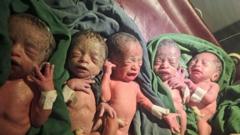
A 35-year-old Ethiopian woman delivered quintuplets after 12 years of trying to conceive, marking a rare reproductive outcome. The mother described herself as "overjoyed" and credited prayer with her unexpected blessing of five children born simultaneously.
Quintuplet births occur in roughly one in 60 million pregnancies naturally, though fertility treatments increase those odds significantly. The case underscores both the emotional toll of prolonged infertility and the dramatic shifts that assisted reproduction can produce. In Ethiopia, where access to fertility services remains limited outside major urban centers, such outcomes remain exceptional events.
The woman's journey reflects a broader global pattern. Infertility affects approximately 10-15 percent of reproductive-age couples worldwide. In sub-Saharan Africa, rates climb higher due to infections, reproductive health complications, and unequal healthcare access. For many women in Ethiopia, the psychological weight of childlessness carries cultural dimensions beyond Western contexts, where motherhood remains deeply tied to identity and social standing.
Multiple births from fertility interventions carry elevated medical risks for both mother and infants, including premature delivery, lower birth weights, and maternal complications. Neonatal care demands intensify dramatically with quintuplets. Ethiopia's healthcare infrastructure, while improving, still grapples with maternal and infant mortality rates significantly above global averages.
The story resonates because it captures raw human longing meeting against-the-odds outcomes. Twelve years represents a marathon of hope, disappointment, and perseverance. The arrival of five healthy infants simultaneously transforms a private struggle into public celebration. Her explicit gratitude toward spiritual faith also reflects how millions navigate infertility through both medical intervention and religious framework, rarely treating them as opposing forces.