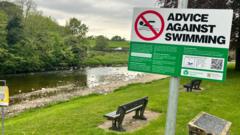
England's river bathing season opens to a troubling health warning. Twelve of fourteen designated river swimming locations show unsafe bacterial levels linked to faecal contamination, according to recent testing.
The Environment Agency tested waters at sites across England ahead of the official bathing season. Results revealed high concentrations of E. coli and enterococci at most locations, pathogens that pose real risks of gastrointestinal illness to swimmers. Only two sites cleared safety thresholds.
This expansion of England's river bathing network, meant to encourage outdoor swimming and water recreation, faces immediate credibility challenges. The programme launched to offer alternatives to crowded pools and coastal beaches, but sewage overflow and agricultural runoff continue to degrade inland waters. Heavy rainfall exacerbates the problem by overwhelming treatment systems and forcing raw sewage discharges into rivers.
The UK Environment Agency issued "don't swim" advisories for the contaminated sites, marking a difficult start for what authorities hoped would become a popular summer activity. River bathing carries different risks than coastal swimming. River currents, depth variations, and water temperature add physical hazards alongside microbial threats.
Water quality data points to systemic infrastructure failures. Water companies have faced mounting pressure over sewage releases, with millions of illegal spills documented annually across England's waterways. Treatment capacity struggles to keep pace with population density and aging infrastructure.
The announcement comes as public appetite for wild swimming grows. Social media and wellness culture have made river dipping trendy, but environmental reality contradicts the romantic appeal. Swimmers face genuine illness risks, from minor stomach upset to serious infections requiring hospitalization.
Officials now face pressure to improve water quality before next summer. Short-term fixes include better overflow management and treatment upgrades. Longer-term solutions require substantial investment in wastewater infrastructure, something water companies have resisted.
For now, swimmers hoping to explore England's river bathing sites should heed the warnings. Only two locations warrant safe entry.