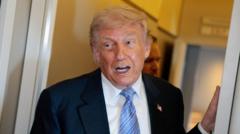
President Trump announced he has postponed a planned U.S. military strike against Iran after receiving requests from Gulf state allies to pursue diplomatic talks instead. Trump stated on social media that "serious negotiations are now taking place," citing this as the reason for delaying the Tuesday attack.
The decision reflects shifting dynamics in Middle East tensions. Gulf nations, likely including Saudi Arabia and the United Arab Emirates, apparently lobbied Trump directly to hold fire and allow diplomatic channels to develop. These states maintain complex relationships with both the U.S. and Iran, balancing security concerns with regional stability and economic interests.
Trump's reversal signals willingness to pivot from military confrontation to negotiation, at least temporarily. The timing matters. Tensions escalated after the U.S. struck Iranian general Qasem Soleimani in January 2020, an operation that prompted Iranian retaliation and raised fears of broader regional conflict. Recent incidents have kept U.S.-Iran relations volatile.
By pausing the strike, Trump gains diplomatic leverage while appeasing Gulf allies who prefer negotiated settlements over open military conflict. These partners depend on U.S. military presence and security guarantees but fear destabilizing warfare that could disrupt oil markets and regional commerce.
The postponement remains conditional. Trump's statement leaves room for military action if negotiations falter. The administration has shown readiness to strike Iranian targets before, making this pause temporary rather than permanent policy shift.
How long serious negotiations continue depends on Iranian willingness to engage and what concessions either side demands. Gulf states backing this approach now face pressure to broker meaningful talks or risk Trump's return to military planning.