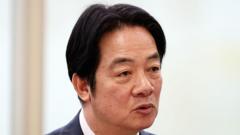
Taiwan President Lai Ching-te has rejected any notion of surrendering sovereignty while pledging Taiwan will not initiate conflict, marking his first direct response to recent talks between Donald Trump and Xi Jinping.
The statement comes after Trump and Xi held discussions that touched on Taiwan's status and independence movements. Lai's comments signal Taiwan's determination to maintain its political autonomy while avoiding military escalation across the Taiwan Strait.
"We will not provoke conflict, but we will not give up our sovereignty," Lai said, framing Taiwan's position as defensive rather than aggressive. The declaration reflects Taiwan's consistent diplomatic strategy of asserting democratic legitimacy while signaling restraint to prevent unnecessary tensions with Beijing.
The timing carries weight. Trump's return to the U.S. political sphere has created uncertainty about America's Taiwan commitment. Beijing has long viewed any strengthening of Taiwan's independence as a red line. Lai's remarks attempt to navigate these crosscurrents by emphasizing Taiwan's commitment to status quo stability rather than pursuing formal independence declarations that could trigger Chinese military action.
Taiwan operates as a self-governing democracy with its own military, government, and economy, yet Beijing claims the island as part of its territory. This unresolved dispute remains one of Asia's most volatile geopolitical flashpoints.
Lai's statement reinforces Taiwan's longstanding position: resist coercion while avoiding provocative moves that might justify military intervention. By publicly responding to the Trump-Xi discussions, Lai reasserts Taiwan's voice in conversations that shape its future, despite being excluded from direct participation in those high-level talks.