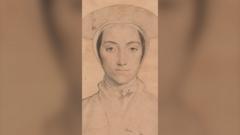
A machine-learning algorithm has challenged the historical record on Anne Boleyn's appearance, suggesting that portraits long attributed to Henry VIII's second wife may not depict her at all.
Researchers used facial recognition technology to analyze paintings held in major collections, including the National Portrait Gallery. The algorithm flagged inconsistencies in key facial features across images traditionally identified as Anne Boleyn, raising questions about centuries of art-historical attribution.
The findings complicate an already murky historical picture. Few verified contemporary portraits of Boleyn exist, and many images labeled as her likeness date from decades or centuries after her 1536 execution. Art historians have long debated whether certain paintings actually show the woman who captivated a king and shifted English religious history.
The algorithm's analysis introduces data-driven scrutiny to connoisseurship. Rather than relying solely on provenance records or stylistic analysis, researchers can now test whether facial geometry aligns across claimed depictions of the same person. Where traditional methods hit a wall, computational tools offer a new angle.
However, the study opens rather than closes debate. Boleyn's portraits have shifted dramatically over time, shaped by political propaganda, artistic convention, and deliberate reimagining by later artists. Even if an algorithm identifies facial inconsistencies, interpreting what that means for historical identity remains contested ground. Renaissance portraiture rarely aimed for photographic accuracy; idealization and symbolic purpose mattered more.
The research underscores a broader truth about Tudor-era imagery. What we think we know about famous historical figures often rests on fragile foundations. Anne Boleyn's face, like much of her story, remains partially shrouded by time, politics, and artistic intention.