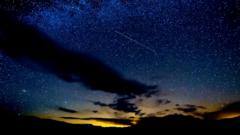
The Eta Aquariid meteor shower peaks this week, delivering one of the year's most reliable displays of shooting stars. The shower runs through May, but the best viewing window falls between May 5-6, when rates reach 10 to 20 meteors per hour under ideal conditions.
The Eta Aquariids originate from debris left by Halley's Comet as it orbits the sun. Every 76 years, the comet's icy nucleus passes near Earth. Between visits, the trail of dust and rock particles drifts through our planet's orbital path, creating annual meteor showers. The Eta Aquariids and the Orionids in October both trace back to Halley's material.
Viewing requires patience and dark skies. Light pollution from cities and towns dramatically reduces meteor visibility. Observers should venture away from urban centers to rural locations with minimal artificial lighting. Moonlight also interferes with detection. The waning crescent moon rises late during the May 5-6 peak, leaving early morning hours darker and more favorable for viewing.
Best viewing occurs after midnight and before dawn. Find an open area with an unobstructed view of the sky. Allow 20 to 30 minutes for eyes to adjust to darkness. No equipment is needed. Binoculars or telescopes actually narrow the field of view, making meteors harder to spot.
The shower's radiant point sits near the star Eta Aquarii in the constellation Aquarius, located low on the southern horizon for Northern Hemisphere observers. Southern Hemisphere viewers enjoy higher radiant positions and correspondingly better viewing conditions. Northern observers still see quality displays despite the radiant's lower angle.
Clouds pose the main wildcard. Clear forecasts increase success rates substantially. Checking local weather predictions the night before optimizes timing and location choices.