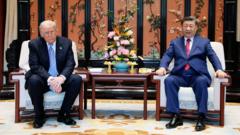
Donald Trump claims he gave no commitment to Chinese leader Xi Jinping regarding U.S. defense of Taiwan. Trump revealed that Xi posed a direct question about whether America would militarily protect the self-governing island, and Trump responded by saying he doesn't discuss such matters publicly.
The statement comes as Trump prepares for a potential second term while maintaining an unpredictable approach to foreign policy and military commitments. His refusal to confirm or deny Taiwan defense protocols contradicts decades of strategic ambiguity that has underpinned U.S.-China relations, though it also preserves negotiating flexibility.
Taiwan's status remains one of the most volatile geopolitical flashpoints globally. The U.S. maintains diplomatic relations with China while providing defensive weapons to Taiwan under the Taiwan Relations Act. Beijing views the island as a breakaway province and has not ruled out military reunification.
Trump's non-answer technique reflects his transactional negotiating style. By neither confirming nor denying commitment, he keeps both Beijing and Taipei uncertain while potentially positioning himself for future deals. This approach differs sharply from Biden-era clarity, where officials repeatedly affirmed that the U.S. would defend Taiwan militarily if attacked.
The ambiguity carries real risks. China might interpret silence as weakness, emboldening military pressure on Taiwan. Conversely, Taiwan and regional allies like Japan and South Korea need security assurances to maintain deterrence and stability.
Trump has previously suggested he'd pressure Taiwan to pay more for U.S. defense and hinted at transactional approaches to the security commitment. His latest comments suggest he's keeping options open rather than locking into traditional alliance frameworks.
The Taiwan question will likely define Trump's China strategy and test whether dealmaking can resolve intractable security disputes.