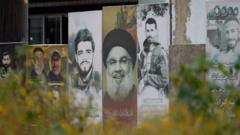
# Hezbollah Retains Grip on Southern Lebanon Despite Ceasefire Collapse
Israeli military operations persist in southern Lebanon even as a ceasefire framework crumbles, yet support for Hezbollah remains entrenched among the civilian population. Residents in the war-torn region view the militant group as their sole viable defense against Israeli aggression, according to reporting from the ground.
The ceasefire, intended to halt escalating cross-border violence, has failed to produce lasting peace. Israeli forces continue strikes and maintain a military presence in Lebanese territory, generating fresh displacement and destruction. These conditions reinforce Hezbollah's messaging that armed resistance represents the only credible deterrent to Israeli military operations.
Local sentiment reflects deeper calculations about power and protection. Communities in the south have endured decades of conflict, multiple Israeli interventions, and Lebanese state institutions widely perceived as weak or ineffective. Hezbollah provides social services, military infrastructure, and a nationalist narrative that resonates with populations exhausted by war yet convinced that surrender invites further aggression.
The group's entrenchment in southern Lebanon operates on multiple levels. Its military wing maintains combat readiness. Its political and social apparatus runs schools, hospitals, and charities. Its messaging frames regional conflict through the lens of resistance and self-determination rather than sectarian affiliation, broadening its appeal beyond its core Shia constituency.
Israeli policymakers face a paradox. Continued military pressure aims to degrade Hezbollah's capabilities but simultaneously validates the group's central claim that only armed strength deters Israeli power. Each civilian casualty and each destroyed neighborhood strengthens rather than weakens Hezbollah's legitimacy among affected populations.
The ceasefire's collapse signals that neither side currently prioritizes de-escalation. For southern Lebanon's residents, this means prolonged insecurity and deepening dependence on Hezbollah for both military protection and civilian aid. This dynamic locks in place a conflict structure that Israeli military operations alone cannot resolve.