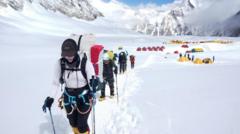
Sherpa guides and climbers have carved a new route up Mount Everest after a massive section of ice broke loose and blocked the standard passage to the summit. The chunk, which fell from the mountain's upper reaches, forced teams to establish an alternative path through treacherous terrain to reach the 29,032-foot peak.
Nearly 1,000 climbers plan to attempt the summit in the coming weeks, making this climbing season one of the busiest on record. The ice collapse has intensified safety concerns among guides and mountaineers already grappling with overcrowding on the world's highest mountain.
The detour adds complexity to an already dangerous ascent. Sherpa teams worked to secure fixed ropes and establish anchors along the new route, a labor-intensive process that extends climbing times and increases exposure to altitude sickness and falling ice. The alternative path crosses steeper ground and areas previously considered less reliable for passage.
Everest has seen record numbers of climbers in recent seasons, driven by improved commercial guiding operations and growing wealth among adventure-seeking clients. This year's surge coincides with better weather windows and pent-up demand from climbers delayed by previous season disruptions. The combination of heavy traffic and environmental instability creates compounding hazards.
Sherpa deaths on Everest remain a persistent issue, with guides bearing disproportionate risk from avalanches, falls, and altitude complications. The forced route change means Sherpas must invest additional effort establishing safety infrastructure, stretching their physical resources thinner. Expedition operators have adjusted timelines and logistics to accommodate the new path, though some climbers face extended timeframes on the mountain.
The ice collapse reflects broader concerns about climate change's impact on high-altitude environments. Rising temperatures destabilize glacial features and accelerate the breakdown of the ice fields that climbers depend on for safe passage. This season's obstacle underscores how environmental shifts are rewriting the rules of mountaineering's most visible challenge.