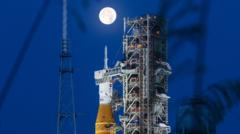
NASA has set early April as its target launch window for Artemis II, the crewed lunar mission that marks humanity's return to the Moon since 1972. The space agency confirmed that technical issues plaguing the Space Launch System rocket have been resolved, clearing the path for liftoff.
The mission represents a critical test of NASA's Artemis program, which aims to establish sustainable lunar exploration and eventually support human missions to Mars. Artemis II will carry four astronauts aboard the Orion spacecraft in a roughly 10-day flight around the Moon, validating life support systems, navigation, and crew safety protocols before a planned lunar landing attempt on Artemis III.
Technical delays have dogged the program for years. Engineers identified and corrected issues with the SLS rocket's engines and thermal protection systems that previously forced schedule slips. NASA's confidence in the April timeline reflects completion of ground testing and resolution of the most critical engineering obstacles.
The mission holds enormous weight for NASA's deep space ambitions. Success validates the Artemis architecture and keeps the agency on track for a Moon landing within the decade. Failure or further delays could ripple across the entire lunar exploration timeline and jeopardize congressional support for the program's substantial budget allocation.
Artemis II's launch follows decades of development and represents one of the most complex engineering efforts in spaceflight history. The mission carries symbolic weight as well, marking a generational milestone for space exploration and potentially inspiring renewed public interest in NASA's human spaceflight capabilities.