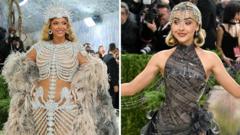
Beyoncé returned to the Met Gala red carpet this year, marking a notable comeback for the superstar at fashion's biggest night. The event, chaired by Vogue editor-in-chief Anna Wintour, drew a star-studded lineup including model and television personality Heidi Klum, who commanded attention with her striking presence on the carpet.
The Met Gala, held annually at the Metropolitan Museum of Art in New York, serves as both a fundraiser for the museum's Costume Institute and a showcase for high fashion's most daring moments. Beyoncé's appearance carries weight beyond the red carpet. Her attendance signals her engagement with fashion's upper echelon at a moment when her music continues to dominate streaming platforms and cultural conversation. The artist has a history of turning Met Gala appearances into iconic moments, from her sculpted silhouettes to her boundary-pushing design collaborations.
Wintour's role as chair underscores Vogue's continued gatekeeping authority in celebrity fashion. The guest list itself functions as cultural currency, with inclusion or absence becoming its own narrative in entertainment and fashion media.
The gala's fundraising mission remains secondary to its status as a barometer of who matters in entertainment and style. Beyoncé's return, alongside Klum's commanding presence, reflects the event's enduring power to generate headlines and social media moments in an increasingly fragmented celebrity landscape. The night produced the visual content that drives engagement across streaming platforms and social networks, converting fashion moments into viral cultural artifacts.
WHY IT MATTERS: Beyoncé's Met Gala return signals her continued relevance across both music and fashion spheres, while the event itself remains the industry's primary platform for defining celebrity hierarchy and fashion trends.