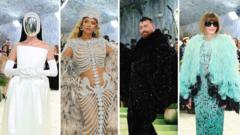
Beyoncé, Rihanna, and Katy Perry commanded the 2026 Met Gala red carpet under the theme "Costume Art," which positions fashion as embodied performance rather than mere decoration. The annual fundraiser for the Costume Institute at the Metropolitan Museum of Art draws the industry's biggest names to interpret thematic frameworks through high-fashion spectacle.
The three pop superstars represent different eras of contemporary music dominance. Beyoncé continues her reign as streaming's heavyweight, consistently topping Spotify and Apple Music with visual albums that blur music and fashion. Rihanna has largely stepped back from recording to build Fenty into a multi-billion-dollar fashion and beauty empire, making her Met Gala attendance rare and newsworthy. Perry rounds out the trio as a consistent pop radio presence, though her recent chart activity has been quieter than her 2010s peak.
The "Costume Art" framing invites performers to explore garments as statements of identity and narrative. For music industry figures, the Met Gala functions as both cultural validation and visual album promo. These appearances generate immediate social media momentum, spike search interest, and influence fashion cycles across TikTok and Instagram.
Beyoncé's attendance reinforces her status as culture's reigning maximalist. Rihanna's presence signals her continued relevance despite a nine-year gap since her last solo album. Perry stakes her claim in a crowded pop landscape where streaming dominance has fractured fandom.
The event's influence on music industry fashion extends beyond attendees. Stylists who dress major acts reference Met Gala looks when building artist brands. Emerging designers use the gala as a launching pad for careers that service music's biggest names.
WHY IT MATTERS: The Met Gala serves as the music industry's visual marketplace, where pop's hierarchy gets visually encoded and fashion moments fuel streaming and cultural conversation for months.