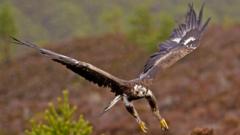
The UK government committed £1 million to bring golden eagles back to English skies after centuries of absence. The project could see the first reintroductions happen as soon as next year.
Golden eagles vanished from England during the 19th century due to persecution by landowners who viewed them as threats to livestock and game birds. The species thrives across Scotland, where roughly 500 pairs now nest, making England's blank slate both an opportunity and a challenge.
The funding backs the Golden Eagle Reintroduction Project, which will source birds from Scotland and potentially other European populations. Conservationists will release them across suitable English habitat, likely in upland regions where prey populations support viable populations. The initiative mirrors successful reintroduction programs elsewhere in Europe, where golden eagles have expanded their range.
Government backing signals a major policy shift. Rural communities and landowners have historically resisted raptor reintroductions, citing concerns about predation. The £1 million signals serious intent to manage those tensions through compensation schemes and stakeholder engagement. Without buy-in from farming and shooting interests, reintroductions fail.
Golden eagles represent apex predators with symbolic weight. Their return would reshape English ecosystems and mark a turning point in rewilding efforts already underway through rewetting peatlands and expanding woodlands. The species requires vast territories, low persecution, and abundant prey. Restoring them demands landscape-scale thinking that extends beyond national borders.
Success hinges on long-term political commitment beyond the initial funding. Golden eagles bred in captivity or translocated from Scotland will take years to establish self-sustaining populations. Early releases next year will test public tolerance and site suitability before scaling up further reintroductions.
WHY IT MATTERS: Golden eagles symbolize England's broader rewilding ambitions, and their return signals whether the government can genuinely restore lost wildlife despite rural opposition.