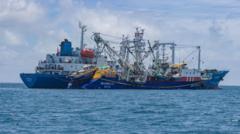
Rising ocean temperatures are pushing Pacific tuna stocks toward cooler waters, threatening the fishing industries that sustain island economies across the region. Countries like Kiribati, Nauru, and Palau depend on tuna licensing fees for up to 50 percent of government revenue. As fish migrate northward and eastward in response to warming waters, island nations lose access to their most valuable resource.
The economic stakes are enormous. Pacific island governments generate hundreds of millions annually by selling fishing rights to foreign vessels. Japan, South Korea, and China operate massive fleets in these waters. When tuna move, that revenue evaporates. Kiribati earned $12 million from a single fishing license last year, money critical for schools, hospitals, and infrastructure on islands with limited economic options.
Climate models show tuna will continue migrating toward the equator and deeper waters over the next decade. This creates a geopolitical problem. Island nations lack the capacity to fish distant waters themselves, making them dependent on foreign fleets. As fish abundance declines in traditional fishing zones, those fleets move elsewhere, abandoning agreements with smaller nations.
The human toll compounds the financial crisis. Fishing supports livelihoods for thousands of Pacific islanders, both directly and through related industries. Young people in these communities face unemployment without viable alternatives. Some island nations are already exploring climate migration, effectively abandoning territories that become economically unviable.
The Pacific Islands Forum has called for stricter international fishing regulations and climate reparations from high-emitting nations. Negotiations at upcoming climate conferences will determine whether island economies receive compensation or face collapse. Without intervention, entire nations could become economically hollowed out within decades, forcing mass migration and potential state failure.
WHY IT MATTERS: Pacific island economies face existential threats from climate change, and how the world responds will determine whether these nations survive or disappear.