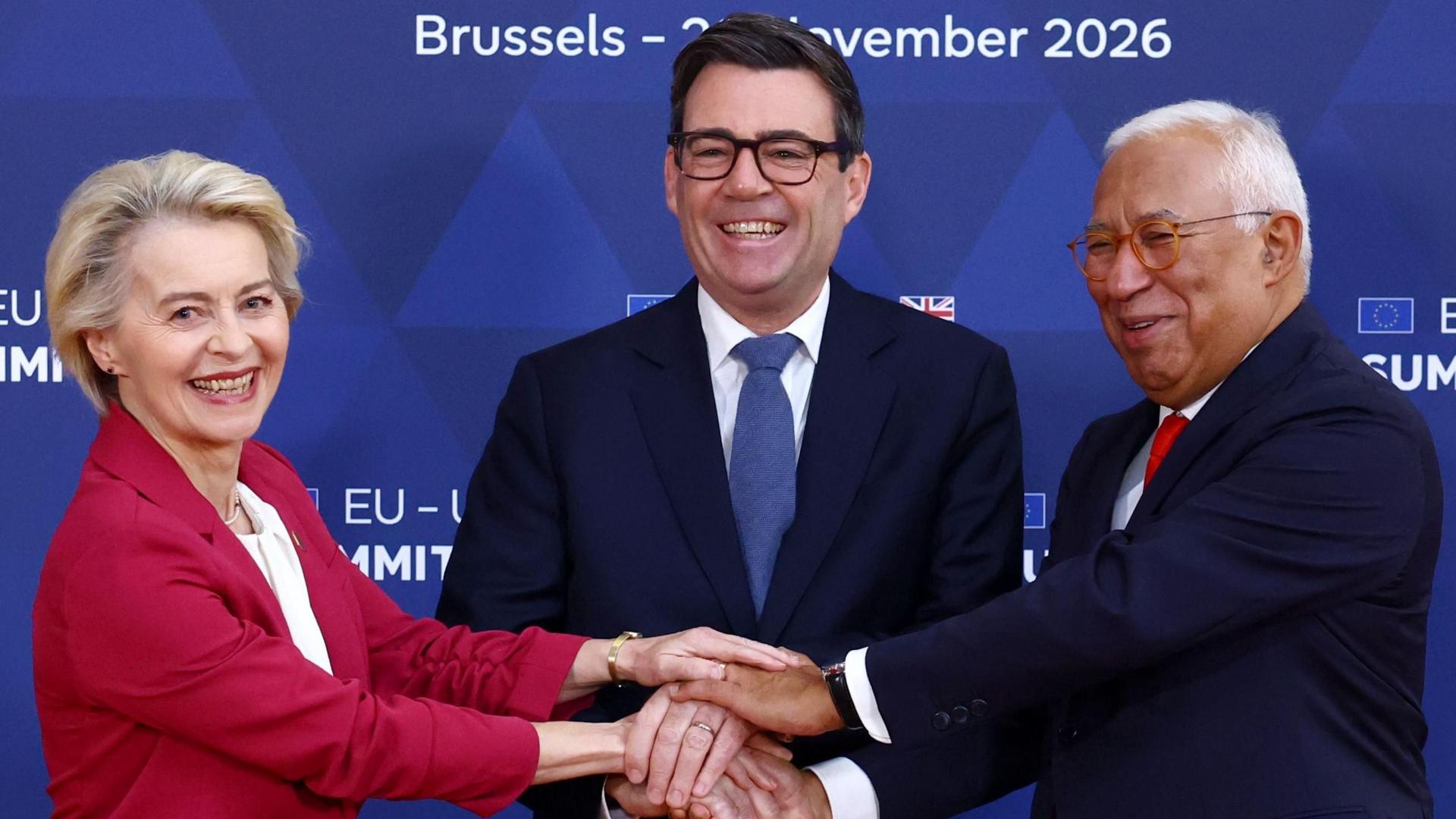
UK Prime Minister Andy Burnham agreed a deal with European leaders covering food exports, emissions trading and a youth mobility scheme, and said the government will explore options for even closer ties with the EU in coming months.
The deal scraps most checks on British food exports from 2028 in return for the UK following some EU regulations. A youth scheme will allow up to 100,000 EU citizens aged 18 to 31 to work, travel and study in the UK for up to three years, with reciprocal rights for young Britons, available by no later than January 2030. The UK and EU also concluded talks on linking their emissions trading systems, to apply from 2028.
Burnham said the Treasury believes the deal could boost the UK economy by up to £17bn a year, or 0.5% of gross domestic product. European Council President António Costa said the EU remains "open to have the closest possible relationship" with the UK. Legislation to implement the deal is expected in Parliament next week.
Burnham said the two sides will conduct an "informal brainstorming process" over coming months to examine longer-term relationship options. He published a 10-year plan next month setting out ambitions for growth. Labour's 2024 election manifesto pledged no return to the single market, customs union or freedom of movement, and Burnham has committed to this.
Conservative leader Kemi Badenoch called the deal "not fair," arguing UK farmers will follow Brussels rules. She disputed the Treasury's economic estimate, claiming other modelling suggests a 0.0% boost. Reform UK leader Nigel Farage called it a "betrayal of the British people." Liberal Democrat leader Ed Davey said the scheme was a "big step forward" but "nowhere near enough."