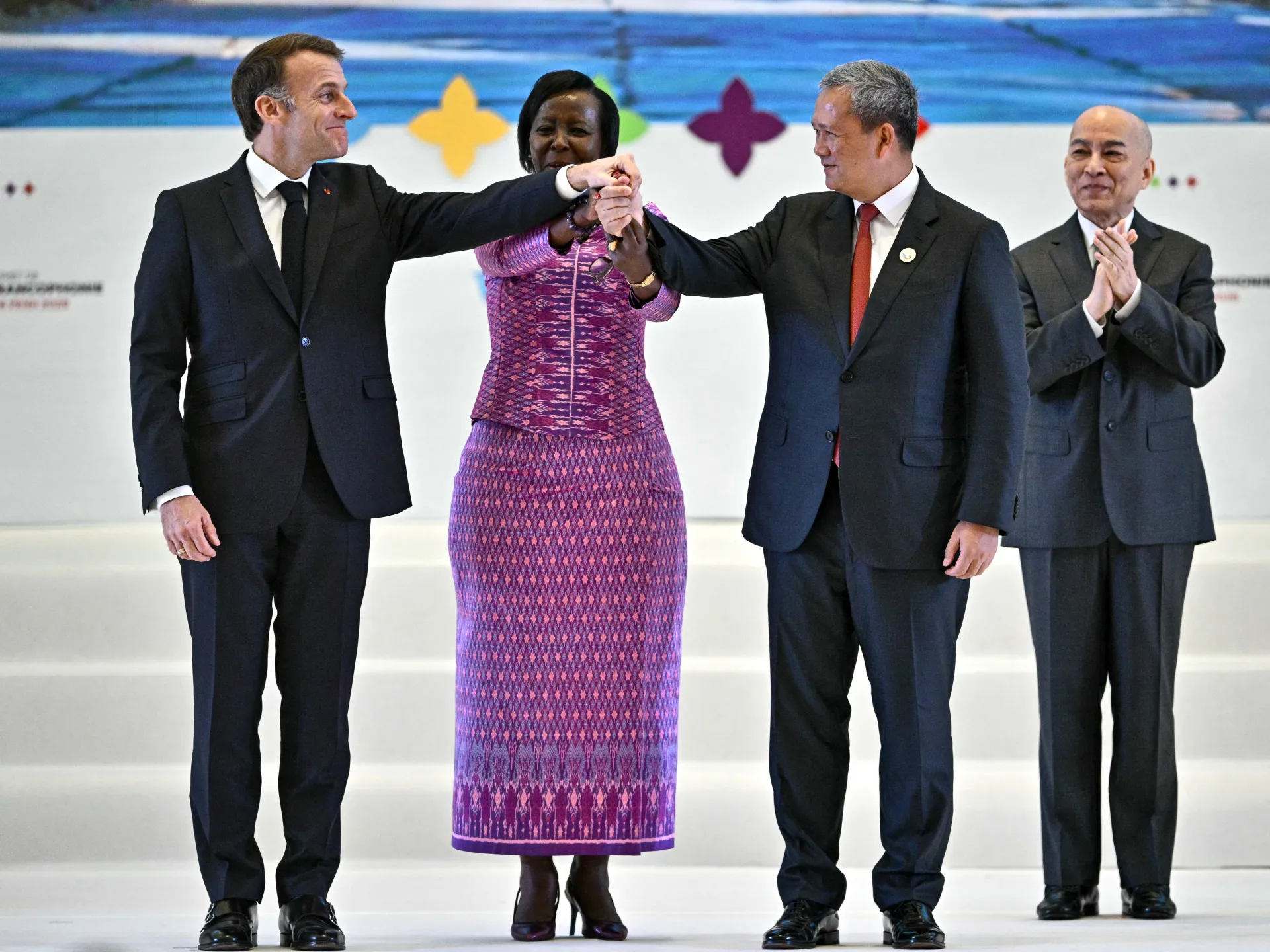
As leaders of the Organisation internationale de la Francophonie gather in Phnom Penh through Monday, they face an existential threat that has nothing to do with the French language and everything to do with geopolitical power. The Democratic Republic of the Congo's threat to leave the 90-state association if Rwanda's Louise Mushikiwabo wins a third term as secretary-general is not mere posturing—it represents a fundamental crack in an organization already weakened by recent defections.
The numbers tell the story. The DRC, with a population exceeding 110 million—roughly 40 million more than France—represents the Francophone world's demographic heavyweight. When Mali, Niger, and Burkina Faso announced their withdrawals in March 2025 following military coup suspensions, the OIF lost significant African presence. Losing Congo would be catastrophic, transforming a global organization into something far diminished. Yet the organization's leadership appears unable or unwilling to prevent this unraveling.
The underlying conflict is hardly obscure. The DRC accuses Rwanda of backing the M23 armed group in Congo's mineral-rich east—an assessment shared by the United States and United Nations experts. By withdrawing its own candidate, Juliana Lumumba (daughter of independence hero Patrice Lumumba), and backing Romanian former Prime Minister Dacian Ciolos instead, the DRC signaled a desire for compromise. Rwanda's response—insisting that Foreign Minister Olivier Nduhungirehe confirmed Mushikiwabo would stay in the race—demonstrates a refusal to seek common ground. When President Paul Kagame reportedly rebuffed even Emmanuel Macron's appeal to step back, the message was unmistakable: Rwanda prioritizes its candidate over organizational cohesion.
France, as the OIF's largest financial contributor to the 2026 budget of 71.7 million euros, holds significant leverage. Macron's office noted that most members agreed on the need for consensus, yet this consensus appears unachievable with the current trajectory. The French president should use his influence more forcefully to broker a resolution that prevents Congo's departure. The alternative is an organization that hemorrhages members and credibility.
The OIF's chosen summit slogan—'Reinvest in Peace for Shared Prosperity and Lasting Stability'—rings hollow when the organization cannot manage peace among its own members. As UN Special Rapporteur Tom Andrews urges delegates to press Cambodia on human rights, the institution itself must demonstrate that it stands for something beyond linguistic convenience. Without resolving this Congo-Rwanda rift before Monday's vote, the Francophone world risks becoming a cautionary tale about how organizations crumble when leaders choose confrontation over consensus.