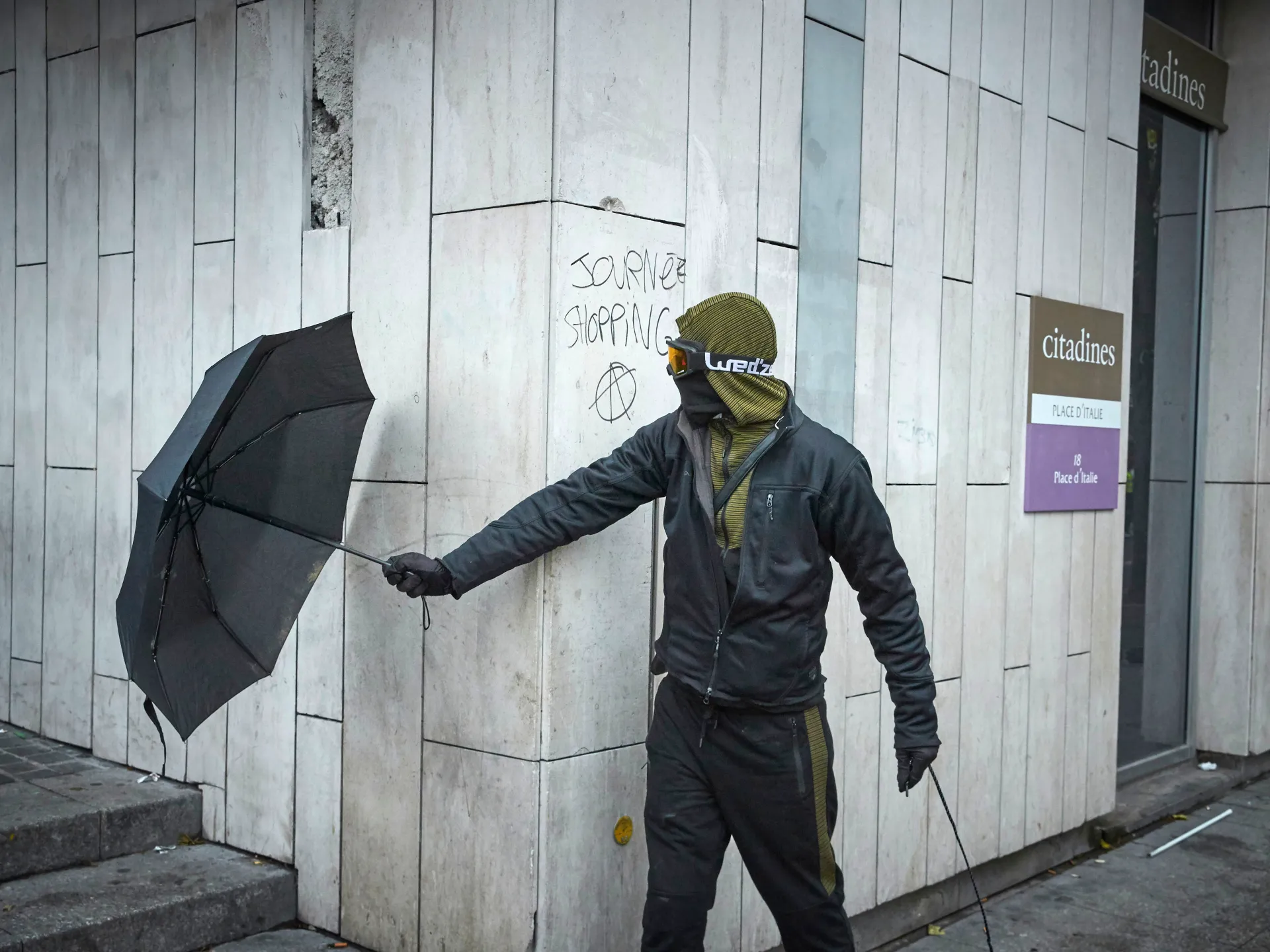
Black Bloc activists, loosely organized anarchist protesters who dress entirely in black, regularly disrupt European demonstrations across France, Italy, Spain, and Albania, according to Al Jazeera reporting.
The groups engage in property destruction, arson, looting, and physical clashes with police. They emerged in 1980s Germany from an autonomy movement opposed to the state, capitalism, and traditional political institutions. Members use black clothing, helmets, and face coverings to avoid police identification.
"There is no leadership, no hierarchy, no superstars, no spokesperson, no press statements," said Francis Dupuis-Deri, a political science professor at the University of Quebec in Montreal who has authored a book on Black Blocs. Members congregate through word of mouth and clothing recognition rather than formal organization.
European intelligence services estimate Black Bloc numbers at 5,000 to 7,000 across the continent, with a few hundred appearing at each major protest, Dupuis-Deri said. The groups cross borders to participate in demonstrations in different countries and conduct advance reconnaissance of target locations, according to a 2023 Italian government police training document.
French Interior Minister Laurent Nunez told Parliament in January that Black Blocs appear "at every social demonstration of any significant size" to "smash things and attack the internal security forces." Some observers contend the groups draw attention to social inequalities, while others argue their violence undermines legitimate protest demands.
Dupuis-Deri cautioned against linking Black Blocs to any single political ideology, noting that right-wing nationalist and neo-Nazi groups in Poland and Germany have adopted Black Bloc tactics, though not in recent years.