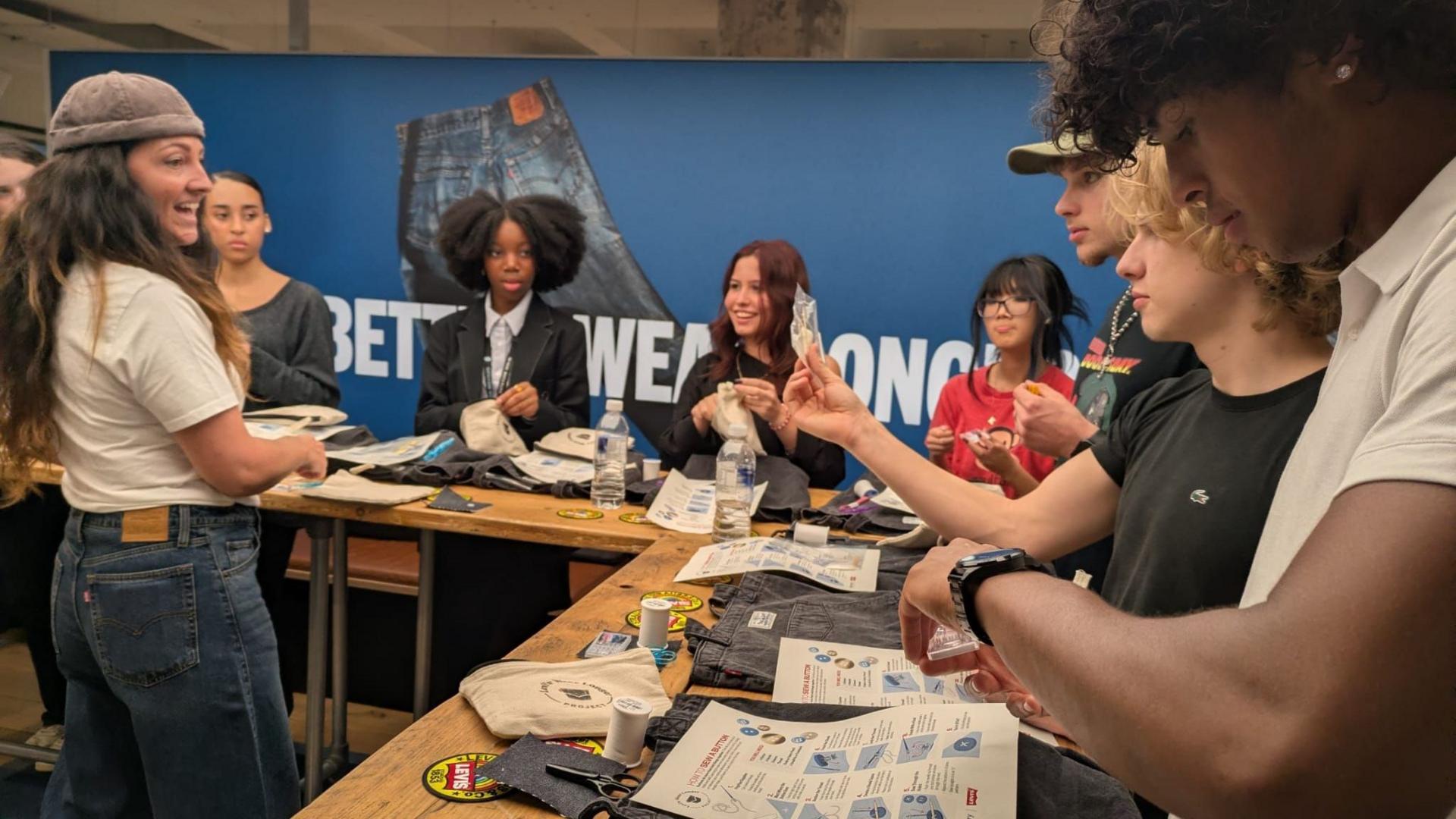
Fashion retailers from Levi's to Primark are offering mending services and workshops as "visible mending" grows beyond hobby crafters into mainstream retail.
The trend involves making repairs decorative rather than invisible, often using contrasting thread colors and traditional Japanese techniques like Sashiko. Alice Brown, a 27-year-old from Lincolnshire, has built a large online following by needle-felting animals onto holes and stains in second-hand clothes she buys. Jayne Eagle, who runs mending workshops in Brighton, describes the practice as an "act of rebellion" against fast fashion.
Several brands have adopted the approach. Uniqlo offers decorative mending using Sashiko techniques. Toast, an artisan clothing store, has a team of 14 in-house "repair artists" and says about a third of customers choose eye-catching mends; its "renewed" pieces fetch higher prices than originals. Finisterre, an outdoor brand, reports around a fifth of its customer mends are designed to be visible. Primark, Levi's and others are launching repair workshops.
Not all customers embrace visible mending. At a Levi's workshop in London, some younger participants said they preferred traditional repairs that leave garments looking new. Bianca, 16, said visible holes risk being perceived as a sign of poverty. Theo, 19, said he would want repaired jeans to "look how I originally bought them."
Paul Dillinger, Levi's head of global design innovation, predicted more creative repairs will appeal to younger customers as they develop skills. He said mending demonstrates "humanity" and that "people crave agency."