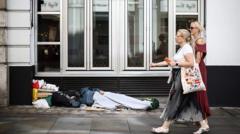
Andy Burnham, the Mayor of Greater Manchester, has announced a major rough sleeping initiative that echoes the government's successful "Everyone In" program from the pandemic. The plan aims to house rough sleepers across England by providing immediate accommodation and support services.
The scheme represents a shift in approach to street homelessness, moving beyond temporary crisis measures toward sustained housing solutions. Burnham's proposal builds on lessons learned during the pandemic when the "Everyone In" initiative rapidly housed thousands of rough sleepers, proving that large-scale intervention could work at speed.
The initiative targets England's most visible homelessness crisis, with rough sleeping numbers rising significantly in recent years despite previous government pledges to eliminate it. By framing the effort around the Christmas period, Burnham adds urgency and moral weight to the campaign, positioning safe housing as a basic necessity during winter months.
The plan coordinates with local authorities and housing providers to identify available accommodation and match it with rough sleepers. Support services, including mental health resources and addiction treatment, accompany the housing offers to address root causes of homelessness rather than providing shelter alone.
This approach differs from previous piecemeal efforts by setting an ambitious national target and timeline. The comparison to "Everyone In" carries weight in policy circles because that program delivered measurable results, housing over 37,000 rough sleepers during the pandemic despite logistical challenges.
Burnham's announcement signals that reducing rough sleeping requires sustained political will and cross-sector coordination. The rough sleeping population includes people with complex needs, including substance abuse, mental illness, and trauma, making housing alone insufficient without wraparound services.
Success depends on sustained funding and local buy-in from councils already stretched by budget cuts. The initiative asks whether pandemic-era urgency and resources can be replicated outside a crisis moment, testing whether governments prioritize homelessness solutions when public attention shifts.