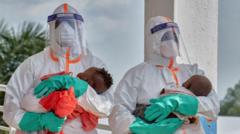
The World Health Organization confirmed this week that the ongoing Ebola outbreak in the Democratic Republic of Congo ranks as the worst on record for the country. The virus has claimed 1,587 lives to date, surpassing previous DRC epidemics in severity and scale.
The strain circulating lacks both an approved vaccine and effective treatment, leaving health workers and patients in an extraordinarily vulnerable position. This absence of medical countermeasures distinguishes this outbreak from more recent West African cases, where experimental vaccines showed promise in containing spread. The DRC outbreak emerges against a backdrop of limited healthcare infrastructure, ongoing armed conflict in affected regions, and deep public mistrust of health authorities.
The WHO's assessment underscores mounting international alarm. DRC has endured multiple Ebola outbreaks over the past two decades, but none have reached this death toll or proved this difficult to control. Previous epidemics killed hundreds, not thousands. The current trajectory suggests hospitals are overwhelmed and community transmission remains uncontrolled in key areas.
Responses remain hampered by violence targeting health workers and treatment facilities. Armed groups operating in eastern DRC actively impede containment efforts, preventing vaccination campaigns and contact tracing. Humanitarian organizations report that communities in affected zones frequently refuse to engage with outbreak response teams, viewing interventions with suspicion.
International health agencies have mobilized resources and personnel, but logistical challenges persist. The DRC health ministry faces severe resource constraints. Border nations, including Uganda and South Sudan, remain on high alert for cross-border cases. Without rapid deployment of experimental vaccines and sustained community engagement, epidemiologists warn the outbreak could spread further across the region and potentially beyond Africa's borders.