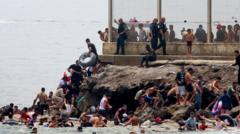
Spain deployed military personnel to the North African enclave of Ceuta after thousands of migrants crossed into the territory from Morocco in a coordinated surge. At least 15 people drowned attempting to swim across to Spanish waters during the chaotic border crossing.
The influx represented an unprecedented breach of Ceuta's border defenses. Moroccan authorities appeared to relax enforcement, allowing migrants to enter Spanish territory in large numbers. Spanish officials declared a state of emergency and mobilized troops to regain control of the situation.
The crossing created dangerous conditions in the water. Migrants attempting to reach Spanish soil by swimming faced treacherous currents and overcrowded conditions. Rescue operations struggled to manage the scale of the emergency, with deaths mounting as people entered the Mediterranean.
Spain moved to secure the border with additional military presence and law enforcement. The government faced pressure to restore order while managing a humanitarian crisis unfolding at one of Europe's most sensitive migration points. Local authorities worked to process and document the arrivals.
The incident escalated broader tensions between Spain and Morocco over migration routes and border control. Ceuta, located on Morocco's northern coast, remains a Spanish territory and a key entry point for migrants attempting to reach Europe. The sudden opening of the border suggested potential geopolitical friction between the neighboring countries.
Spanish officials announced plans for deportations and increased security measures. The coordination of the crossing from the Moroccan side raised questions about whether the surge was deliberate. The incident underscored Europe's ongoing struggle with migration management along its southern borders.