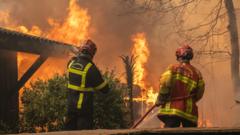
More than 300,000 people evacuated from their homes across France and Spain as massive wildfires tore through both countries, with no containment in sight. Spain's Prime Minister Pedro Sánchez warned of "complex hours" ahead, signaling escalating danger. French authorities confirmed they remain far from controlling the blazes ravaging the region near Bordeaux, where fires have consumed vast swaths of forest and spread toward populated areas.
The evacuations represent one of Europe's largest mass displacements due to wildfires in recent years. Spain faced the brunt of the crisis, with regions in the northeast and south dealing with multiple fronts simultaneously. France grappled with fire behavior complicated by high temperatures, low humidity, and unpredictable wind patterns that pushed flames toward residential zones.
Firefighters from both nations mobilized hundreds of crews and equipment, but the scale of the emergency outpaced initial response capacity. Cross-border coordination became essential as flames threatened to spread across national boundaries. Aerial support and water-bombing operations supplemented ground efforts, though resources remained stretched.
The timing amplified concerns about Europe's climate vulnerability. Mediterranean regions have experienced intensifying fire seasons, with hotter, drier conditions extending the danger window well into late summer and fall. Environmental data showed this fire season tracking above historical averages for both intensity and frequency.
Emergency services urged residents to follow evacuation orders immediately rather than risk being cut off by rapidly advancing flames. Authorities established shelters and aid centers for displaced residents facing uncertainty about return timelines. The situation remained fluid as fire behavior depended on weather patterns over the coming days.
This crisis underscores the escalating strain on European emergency response systems as extreme weather events grow more severe and frequent.