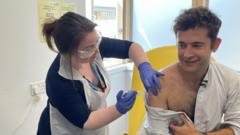
Ed Hunt, a 37-year-old from the United Kingdom, became the first human recipient of an experimental Ebola vaccine following the deadly outbreak in the Democratic Republic of Congo. Hunt volunteered after witnessing news coverage of the crisis, marking the initial phase of human trials for the new immunization.
The vaccine represents a critical development in pandemic preparedness. The DRC outbreak has claimed hundreds of lives, creating urgency around protective measures. Hunt's participation signals the transition from laboratory and animal testing into human efficacy and safety evaluation.
Experimental Ebola vaccines have shown promise in prior trials, but moving to human subjects represents a pivotal moment. The vaccination protocol will monitor Hunt for adverse reactions and immune response over coming weeks and months. Data from his case and subsequent volunteers will determine whether the vaccine generates adequate antibodies without dangerous side effects.
The timing reflects global health priorities. Ebola outbreaks, while contained geographically, carry catastrophic mortality rates. Healthcare workers and at-risk populations in affected regions stand to benefit most if trials succeed. The vaccine's development accelerates because previous outbreaks demonstrated both the virus's lethality and the feasibility of rapid immunization campaigns.
Hunt's decision underscores the volunteer commitment essential to vaccine development. His willingness to participate in early-stage human trials, despite inherent unknowns, advances medical science during an active health emergency. The UK's involvement signals international cooperation on containment strategies.
Regulators will track Hunt's health metrics closely. Success at this stage could accelerate expanded trials in DRC and neighboring countries. The broader implication addresses vaccine hesitancy worldwide. Demonstrating rapid, transparent development protocols builds confidence in immunization efforts for future outbreaks. Hunt's participation offers a tangible pathway from crisis response to preventive medicine.