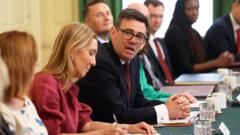
Keir Starmer convened his first cabinet meeting and prioritized living costs as a central policy focus for the Labour government. The new prime minister announced a VAT cut on household electricity, signaling immediate action on the cost-of-living crisis that defined the previous election cycle.
The cabinet directive targets affordability across British households, a cornerstone of Labour's election platform. Starmer instructed ministers to develop strategies addressing energy prices, which remain elevated despite modest recent declines. The VAT reduction on electricity represents the government's first concrete fiscal intervention, delivering relief to households struggling with winter bills.
This opening cabinet session establishes the administration's operational priorities. Starmer framed the meeting around economic stability and household financial pressure, placing consumer welfare ahead of broader fiscal consolidation debates. The emphasis reflects Labour's electoral coalition, which prioritized working families and pensioners facing genuine hardship under the previous Conservative government.
The electricity VAT cut amounts to a direct price reduction at point of sale, affecting millions of households immediately. While modest in scope compared to broader energy support schemes deployed during the previous crisis, the measure demonstrates Labour's commitment to early delivery on campaign promises. Energy remains a politically sensitive sector, with opposition parties likely to scrutinize whether cuts sufficiently address underlying structural costs.
Cabinet ministers received explicit instructions to develop coordinated living cost policies, suggesting a whole-of-government approach rather than siloed departmental responses. This alignment indicates Starmer's intention to present unified Labour messaging on economic competence heading into the parliamentary session.
The first cabinet meeting sets the tone for Labour's governance priorities. Cost-of-living remains the dominant domestic issue affecting voter sentiment, and Starmer's early focus signals his understanding of electoral vulnerabilities and public expectations.