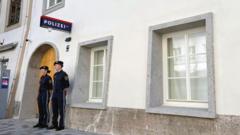
Austria opened a police station inside Adolf Hitler's birthplace in Linz, a deliberate move to neutralize the site's Nazi symbolism and prevent it from becoming a pilgrimage destination for extremists. The former 17th-century inn has sat at the center of decades of debate over how to handle a building intrinsically tied to one of history's darkest chapters.
The Austrian government seized the property in 2016 and spent years wrestling with the question: demolish it, repurpose it, or leave it standing? Demolition risked creating a martyr's monument through absence. Leaving it untouched risked attracting neo-Nazi visitors. The police station solution emerged as a practical answer that transforms the space into something civic and purposeful.
By filling the building with ordinary state function, Austrian authorities essentially defang its symbolic power. Police officers conducting administrative work inside Hitler's birthplace strips the location of mystique. The strategy reflects a broader European approach to difficult heritage sites. Rather than erasure or preservation as shrine, authorities attempt reclamation through repurposing.
This move carries particular weight in Austria, where Nazi history remains contentious. Austria often positioned itself as Hitler's first victim rather than a willing participant in Nazi crimes, a narrative that has shifted in recent decades as historians documented widespread Austrian complicity. The police station opening signals Austria's commitment to confronting rather than venerating its fascist past.
The building's transformation required renovation work and security considerations, since it now functions as an active government facility. Linz, Hitler's childhood city, has worked to redefine itself through cultural institutions and modern development. The police station represents one more layer in that reclamation effort, turning infamy into function.