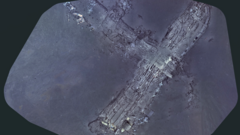
Salvage teams have located the wreckage of Pan American Airways Flight 121, the Clipper Endeavor, 74 years after it crashed off the coast of Guam in 1946, killing all 52 people aboard.
The discovery holds profound historical weight. The accident on July 7, 1946, became a watershed moment for commercial aviation safety. The crash directly prompted aviation authorities to mandate pre-flight safety briefings for all passengers—a practice that persists today across every commercial airline globally.
The Clipper Endeavor, a Martin M-130 flying boat, went down in the Pacific Ocean while on a transpacific route. The investigation into the disaster revealed critical gaps in passenger safety protocols. Before this accident, safety demonstrations were not standardized or required. Airlines treated passenger briefings as optional courtesies rather than essential procedures.
Pan American Airways, then the world's dominant international carrier, operated the luxury flying boats that defined long-distance air travel in the 1930s and 1940s. The Clipper fleet represented the pinnacle of aviation technology and comfort at the time, yet the Endeavor's loss exposed how little passengers understood about emergency procedures.
The wreckage discovery in Micronesian waters offers closure to families of the victims and provides researchers with physical evidence of what remains one of aviation's consequential disasters. The location had been lost to the ocean for decades, making recovery efforts extremely challenging until recent advances in underwater salvage technology.
The legacy of Flight 121 extends far beyond the immediate tragedy. Every passenger who hears the safety briefing on modern flights owes that requirement to this catastrophe. Aviation safety protocols evolve through investigation and tragedy. The Clipper Endeavor accident forced the industry to recognize that informed passengers significantly improve survival rates during emergencies.