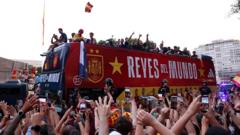
Spain's Women's World Cup champions received a hero's welcome in Madrid after their historic tournament victory. The squad met with the Spanish royal family before embarking on an open-top bus parade through the capital, where nearly two million fans crowded the streets to celebrate.
The massive turnout underscores the explosive growth of women's football in Spain and across Europe. The Spanish national team's World Cup triumph marks a watershed moment for the sport, demonstrating that women's football now commands mainstream attention and cultural significance comparable to the men's game. The scale of the celebration, with two million fans lining Madrid's streets, rivals historical parades for other major sports championships.
This victory caps a transformative period for Spanish women's football. La Roja's success on the world stage translates directly into increased viewership, sponsorship interest, and youth participation in women's academies across the country. Broadcasting networks and sponsors take note when tournaments generate these kinds of attendance figures and public enthusiasm.
The royal family's official reception signals institutional recognition of women's football as a central part of Spanish national pride. Such endorsements from state figures legitimize the sport at the highest levels, encouraging investment in professional leagues and player development pipelines.
Spain joins a growing list of nations prioritizing women's football infrastructure. Countries like England, Australia, and the Netherlands have similarly invested in women's teams, yielding competitive returns and cultural dividends. The World Cup victory positions Spain to capitalize on momentum heading into qualifying campaigns for major tournaments and domestic league expansion.
The parade itself becomes media spectacle. Social media amplifies images of the celebration globally, attracting international sponsors and building the personal brands of key players. For Spanish clubs participating in the UEFA Women's Champions League and domestic competitions, this exposure drives ticket sales and commercial opportunities.