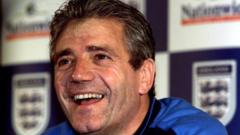
Kevin Keegan, the legendary midfielder who captained England and shaped the modern fortunes of Newcastle United and Liverpool, died at age 75. His passing comes seven weeks after he publicly disclosed a stage four cancer diagnosis.
Keegan left an indelible mark on English football across multiple decades. As a player, he earned 63 caps for England and led the national team as captain during a transformative era in the 1970s. His club career defined an epoch. At Liverpool under Bill Shankly and Bob Paisley, Keegan won three First Division titles and the European Cup in 1977. The midfielder's intensity and technical skill made him a cornerstone of the Reds' dynasty.
His arrival at Newcastle in 1982 revitalized the club's fortunes and transformed him into a folk hero on Tyneside. Keegan's charisma and work rate inspired a generation of Newcastle supporters during a period when English football was ascending in Europe. He won the Ballon d'Or in 1978 while at Hamburg, cementing his status among the era's elite players.
Beyond playing, Keegan managed at the highest level. He took charge of England from 1999 to 2000, though his tenure ended prematurely after a Euro 2000 campaign that disappointed fans and critics alike. His managerial record sparked debate, yet his legacy as a player remained untouchable.
Keegan's announcement of his cancer diagnosis last month shocked the football world. He remained characteristically candid about his health challenges, staying public-facing even as he confronted the illness. His death marks the end of an era for English football, removing one of the game's most recognizable figures from a generation that redefined how the sport was played and celebrated.