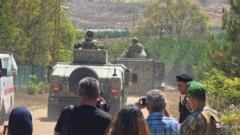
Lebanon's military moves into a narrow strip of territory as Israeli forces begin their phased withdrawal under a US-brokered ceasefire deal. The agreement, mediated by American officials, marks the first concrete step toward ending the conflict between Israel and Hezbollah that escalated dramatically in 2024.
The Lebanese army deploying in this "pilot zone" signals both sides' commitment to the fragile truce. Israeli troops occupied portions of southern Lebanon during intense fighting with the militant group. The withdrawal framework calls for Israeli forces to exit Lebanese territory over a defined timeline, with Lebanese military units replacing them to restore state control over border areas.
This deployment represents a test case for the broader ceasefire mechanism. Success in the pilot zone could accelerate the full Israeli withdrawal and the establishment of a stronger Lebanese military presence along the demarcation line. The agreement includes provisions for international monitoring, likely involving UN peacekeeping forces already stationed in southern Lebanon since 2006.
The ceasefire caps months of escalating cross-border attacks that transformed regional tensions into open warfare. Hezbollah's rocket barrages prompted Israeli airstrikes that killed thousands and displaced hundreds of thousands of Lebanese civilians. The conflict threatened to pull regional powers deeper into Middle Eastern instability.
For Lebanon, rebuilding military capacity in these zones means strengthening state authority over territory long influenced by Hezbollah's armed wing. The Lebanese army's ability to maintain order and prevent weapons smuggling will test whether the ceasefire holds. US involvement underscores Washington's interest in de-escalating the conflict and preventing broader regional conflict.
The pilot deployment marks a cautious return to normalcy after months of destruction. Both parties face pressure to implement terms faithfully. Any breach risks reigniting violence and collapsing the fragile agreement.