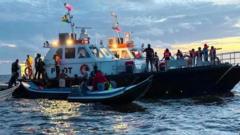
A passenger ferry capsized off the coast of Guyana, leaving at least 27 people dead and 83 others missing. The vessel went down in waters off South America's northeastern coast, triggering an immediate search and rescue operation.
Guyana's Prime Minister announced that authorities have launched a formal investigation into the disaster. Officials expressed hope that additional survivors would be located during ongoing rescue efforts in the area.
The capsizing marks one of the region's deadliest maritime incidents in recent years. Details about the ferry's passenger capacity, the cause of the capsizing, and the exact timeline of events remain under investigation. Rescue teams deployed to the site to search for missing persons among the wreckage.
Maritime accidents in the Caribbean and South American waters have historically been linked to overcrowding, inadequate safety equipment, poor vessel maintenance, and adverse weather conditions. The scale of this incident—with more than 100 people either confirmed dead or unaccounted for—underscores ongoing safety concerns in regional maritime transport.
Authorities have not yet disclosed the ferry's name, departure point, or destination. The investigation will likely examine whether the vessel met international maritime safety standards and whether weather conditions contributed to the capsizing.
This tragedy adds to a troubling pattern of maritime disasters affecting passenger vessels in developing regions where regulatory oversight remains inconsistent and ferry operators sometimes operate aging fleets without adequate inspection protocols.