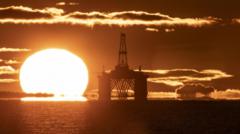
Keir Starmer's Labour government is poised to throw its weight behind North Sea oil and gas production, a striking reversal from the party's previous climate commitments. The incoming Prime Minister plans to announce fresh support for the sector immediately upon taking office, signaling that energy security now takes priority over net-zero acceleration.
This pivot marks a dramatic shift in Labour's positioning. During opposition, the party attacked the Conservatives for their fossil fuel dependence. Now, facing energy bills and grid stability concerns, Labour embraces licensing new oil and gas fields as essential infrastructure.
The move reflects broader economic pressures. Britain imports significant crude oil volumes despite North Sea reserves. Starmer's team argues that domestic production reduces reliance on volatile international markets and bolsters jobs in Scotland and northeast England, regions critical to Labour's electoral coalition. Licenses issued now won't produce barrels for years, but the political signal matters immediately.
Environmental groups have already condemned the approach. They argue that approving new extraction locks in decades of carbon emissions when renewable energy capacity can grow faster. The contradiction stings sharper because Labour campaigned on being the "green party" under Ed Miliband's stewardship.
Starmer frames the decision pragmatically. He insists that declining North Sea output doesn't stop global oil consumption, merely shifts it to less regulated producers. Better to control supply domestically while investing heavily in wind and renewables alongside fossil fuel infrastructure.
The announcement touches a raw nerve in climate politics. Labour's climate advisors have privately flagged tensions between short-term energy security and long-term decarbonization goals. This decision publicly resolves that tension in favor of the former.
The North Sea backdrop matters too. The aging basin requires substantial investment to maintain production. Without new licensing, operators argue, decline accelerates. Labour apparently views that risk as unacceptable.