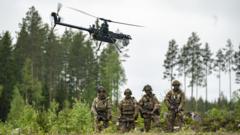
Keir Starmer's pledge to increase defence spending has locked in future commitments that will burden his successor with a £4.7 billion annual shortfall by 2030. The Prime Minister announced additional investment in military capabilities, signaling commitment to NATO obligations and responding to security threats from Russia and China. However, the funding mechanism creates a structural problem for whoever leads the government next.
The spending increase targets personnel, equipment modernization, and operational readiness. Starmer framed the announcement as essential to British security interests and alliance responsibilities. Yet the Treasury faces a gap between announced commitments and available resources. The next Prime Minister will inherit this mismatch without obvious options to close it without cutting elsewhere or raising taxes.
Defence spending currently consumes roughly 2.4 percent of GDP. NATO pressure pushes members toward 2.5 percent or higher. Starmer's plan accelerates that trajectory but doesn't fully fund it through 2030. The shortfall emerges as other spending commitments from the current government remain locked in. Health, social care, and education pledges consume significant budget room.
This creates a political trap for Starmer's successor. Fully funding defence requires either breaching other departmental caps, finding efficiency savings that don't exist, or pursuing tax rises that extend beyond the current government. None of these options prove popular with voters or Parliament. The successor could theoretically scale back the defence commitment, but doing so risks antagonizing NATO allies and inviting criticism from opposition parties on national security grounds.
The timing compounds the problem. Economic growth forecasts remain modest. Public sector pay pressures persist across NHS, military, and civil service payroll. The £4.7 billion annual gap represents real money in a constrained fiscal environment.
Starlem has traded electoral credit for the defence announcement against genuine structural headaches for his successor. The next PM will face pressure to either maintain the commitment by cutting services or reduce it by taking security criticism.