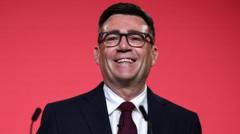
Keir Starmer's Labour government formally begins Monday with a new prime minister taking the helm. Burnham, stepping into the role, will deliver his inaugural address from Downing Street with a focus on domestic relief and recovery.
The speech marks a turning point after a decade of political instability. Britain has cycled through seven prime ministers since 2014, each leaving their stamp on policy before departing. Burnham's arrival signals Labour's shift toward prioritizing practical governance over the ideological warfare that defined recent Conservative administrations.
"More breathing room" emerges as the central message. This framing suggests a pivot away from austerity rhetoric and toward policies addressing cost-of-living pressures, NHS strain, and public services deterioration. The phrasing reflects Labour's broader campaign strategy, which leaned heavily on competence messaging and restoration of institutional stability rather than radical transformation.
The speech timing matters. Monday's address sets expectations for the first 100 days and beyond. Starmer will outline concrete priorities, likely touching on energy costs, healthcare waiting lists, and economic growth. The Labour manifesto already signaled commitments on NHS funding, investment in green jobs, and tighter regulation of private equity and hedge funds.
Burnham's first weeks will test whether Labour can deliver on its promise of steadier governance. The party inherits a fractured economy, depleted public services, and voter skepticism born from years of broken promises. His ability to execute on early pledges directly impacts Labour's credibility heading into a full five-year term.
The symbolism of becoming the seventh PM in a decade cannot be overstated. Voters explicitly rejected the revolving door of recent years. Burnham's longevity and steady image stand in sharp contrast to the instability that preceded him. His government has zero margin for error on basic competence.