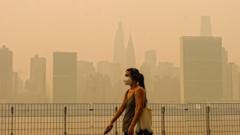
Trump has threatened additional tariffs on Canada over wildfire smoke drifting into US cities, calling the air "filthy." The warning escalates tensions between the two nations as Canadian wildfires continue sending pollution across the border during peak fire season.
Canadian leader Mark Carney responded by emphasizing that both countries share equal responsibility in addressing climate change, which scientists link directly to intensifying wildfire conditions. Rising temperatures extend fire seasons, dry out vegetation faster, and create conditions for more frequent and severe burns. Canada battles some of North America's worst wildfire activity annually, and smoke regularly crosses into US airspace, affecting air quality in cities across the northern border states.
Trump's tariff threat adds a protectionist dimension to what has traditionally been an environmental and public-health issue. His framing prioritizes immediate air quality impacts over systemic causes, while Carney's response pushes back against unilateral blame, arguing climate action requires binational cooperation. The dynamic reflects the broader Trump administration approach of using tariffs as a leverage tool across multiple policy domains.
Wildfires in Canada have worsened dramatically over the past decade. Last year's record-breaking fire season sent smoke as far south as New York City, forcing air quality alerts across multiple states. Experts attribute the surge to earlier snowmelt, longer drought periods, and hotter summer temperatures. Both countries have firefighting agreements and disaster-response protocols, but smoke transboundary movement remains contentious when air quality crises hit US population centers.
The tariff threat signals Trump may link environmental cross-border issues to trade negotiations, a departure from how previous administrations handled wildfire smoke disputes. Whether the threat materializes depends on ongoing diplomatic talks, but it underscores how climate-related challenges increasingly intersect with trade policy.