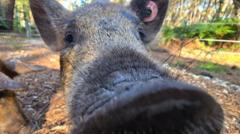
A herd of Mangalitsa-cross pigs is restoring heathland on Brownsea Island, a nature reserve in Poole Harbour off the Dorset coast. The National Trust, which manages the site, introduced the "cheeky" pigs to help regenerate the landscape by rooting through vegetation and disturbing the soil. Their natural foraging behavior mimics the ecological work that historical grazing animals once performed on the island's heathland ecosystem.
The pigs will grow to approximately 180 kilograms and spend their time churning up dense bracken and other invasive plant growth that has smothered native heathland species. This disturbance allows seeds to make contact with bare soil, promoting regeneration of ericaceous plants and grasses that thrive on heathland. The approach reflects a broader conservation strategy that uses livestock as ecological tools rather than relying solely on human-intensive management.
Brownsea Island, owned by the National Trust, has faced decades of ecological degradation as heathland gave way to dense scrub. Traditional grazing animals would have naturally prevented this succession, but their absence created a management challenge. The introduction of the pigs offers a lower-labor alternative to mechanical clearing or chemical intervention.
The Mangalitsa breed, originally from Hungary, was selected for this project because the crosses are hardy, suited to outdoor conditions, and their rooting behavior is particularly effective at soil disturbance. Conservationists hope the pigs will demonstrate a replicable model for heathland restoration across Britain, where similar degraded sites exist on protected reserves and commons.
The project also engages visitors to the island, drawing attention to conservation challenges and solutions. As the pigs work the landscape over coming months, their ecological impact will be monitored to assess effectiveness and inform future heathland management strategies.