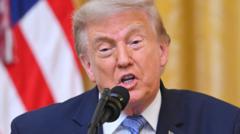
President Trump claimed "shocking vulnerabilities" exist in US election security and alleged China interfered in the 2020 presidential election, assertions that directly contradict findings from US intelligence agencies. Trump's statements came ahead of the midterm elections, reigniting debate over election integrity and foreign interference claims.
Trump provided no evidence for the China allegations. The Office of the Director of National Intelligence, along with the Department of Homeland Security's Cybersecurity and Infrastructure Security Agency, previously concluded that Russia, not China, conducted the most significant foreign interference operation in 2020. Intelligence officials found no evidence that any foreign power altered vote counts or changed election outcomes.
The Trump campaign has consistently challenged the 2020 results, promoting unsubstantiated claims about election fraud. Election security experts and Trump's own Attorney General at the time called the 2020 election "the most secure in American history." State election officials from both parties verified vote counts multiple times across contested states.
Trump's timing reflects broader Republican messaging ahead of midterms, where election integrity has become a central campaign issue. Republican candidates nationwide have amplified election security concerns, though the concerns focus on domestic vulnerabilities rather than foreign interference.
Election security experts note that while vulnerabilities do exist in some state voting systems and election administration processes, these remain largely administrative rather than allowing large-scale vote manipulation. States have invested billions upgrading infrastructure since 2016, including implementing paper ballot backups and improving post-election audits.
The contradictions between Trump's claims and official intelligence assessments highlight ongoing partisan divisions over election security narratives. His statements add to polarization around election trust heading into the midterms, when expanded voting is expected as candidates compete for control of Congress.