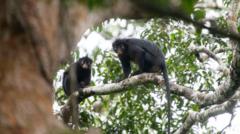
A new monkey species with distinctive orange lips has been discovered in the Democratic Republic of Congo, marking a rare addition to the primate family. The species, identified in a remote forest region, remained unknown to science until now, hidden within one of Africa's least explored ecosystems.
Researchers describe the discovery as extraordinary. The animal's most striking feature is its vivid orange coloring around the mouth, which sets it apart from neighboring primate species. Scientists involved in the research expressed awe at encountering a previously unknown primate, calling it an "amazing feeling" to look into the face of a creature so few people have ever seen.
The find underscores how much biodiversity remains undocumented in Central Africa's dense rainforests. The DR Congo harbors some of the planet's richest wildlife, yet vast tracts remain scientifically unexplored. Each year, researchers uncover new species hiding in these remote zones, often in regions where human activity and conflict have limited scientific access.
This discovery holds implications for conservation. Unknown species cannot be protected without documentation and study. The identification triggers urgent questions about habitat threats, population size, and whether protective measures are necessary before the species faces extinction. Deforestation, hunting, and habitat loss endanger countless Congolese animals.
The orange-lipped monkey joins a growing list of recently identified primates across the Congo Basin. In the past decade, several new monkey species have emerged from scientific investigation, each revealing how incomplete our understanding of African primate diversity remains. These discoveries often arrive just as their habitats face mounting pressure from human expansion.
The research team now faces the work of studying the species' behavior, ecology, and population dynamics. Understanding these basics becomes critical for informing conservation strategies and potential protection efforts in years ahead.