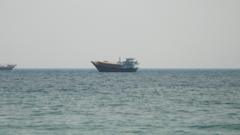
The Strait of Hormuz has become the flashpoint for renewed US-Iran tensions as diplomatic efforts collapse. The waterway, through which roughly 20 percent of global oil passes daily, sits at the center of escalating military posturing and strategic miscalculation.
The breakdown of the nuclear deal, formally the Joint Comprehensive Plan of Action, has emboldened Iran to flex control over one of the world's most critical chokepoints. The Islamic Revolutionary Guard Corps has seized vessels, threatened shipping routes, and conducted provocative military exercises in the narrow channel separating Iran from Oman. These actions reflect Tehran's calculation that economic pressure from renewed US sanctions leaves little incentive for restraint.
The US has responded with increased naval deployments, carrier strike groups, and counter-threat operations designed to keep shipping lanes open. American officials frame this as defending international commerce. Iran frames it as imperialist interference in its territorial waters.
The ceasefire mentioned in reporting refers to broader regional dynamics. Proxy conflicts in Yemen, Syria, and Iraq remain active, with the Strait situation serving as a visible proxy for deeper strategic competition. Both powers lack direct diplomatic channels to de-escalate misunderstandings, a gap the original deal partially filled.
Energy markets remain vulnerable. Oil traders price in geopolitical risk whenever Iranian threats escalate. A sustained blockade or military incident could spike global crude prices, rippling through economies worldwide. European partners dependent on Gulf oil watch nervously.
The weakness exposed is institutional. The JCPOA created structures for monitoring and dispute resolution, but those mechanisms dissolved when the Trump administration withdrew in 2018. Subsequent efforts to revive the agreement stalled over sanctions relief and nuclear compliance terms. Without binding frameworks, both Tehran and Washington operate on worst-case assumptions.
Control of the Strait reflects deeper questions about regional order. Iran asserts its right to monitor traffic in adjacent waters. The US insists on freedom of navigation as an international principle. These positions appear irreconcilable, leaving the waterway as a perpetual flashpoint where miscalculation carries global consequences.