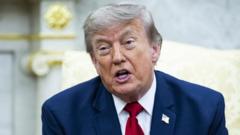
Donald Trump escalated rhetoric toward Iran by threatening military strikes on critical infrastructure unless the country returns to nuclear negotiations. The former president's comments came as the US and Iran entered their fourth consecutive day of direct military exchanges, with American forces reimposing a naval blockade on Iranian ports.
Trump's threat specifically targeted bridges and power plants, infrastructure vital to Iran's economy and civilian operations. The comments reflect a hardline posture that contrasts sharply with diplomatic efforts to restart talks on Iran's nuclear program. The implicit demand ties military de-escalation to Iran's willingness to return to the negotiating table.
The latest round of hostilities intensified existing tensions stemming from the collapse of the Joint Comprehensive Plan of Action (JCPOA) in 2018 under Trump's first administration. That withdrawal triggered Iran's subsequent nuclear advancement and regional proxy activities, eventually leading to the current military confrontation.
The port blockade represents economic leverage aimed at pressuring Tehran into compliance. By restricting maritime trade, the US strategy targets Iran's oil exports and commerce, historically the country's economic lifeline. The blockade compounds existing US sanctions on Iranian financial institutions and energy sectors.
This escalation carries significant geopolitical stakes beyond bilateral US-Iran relations. Regional allies including Israel and Gulf states monitor the situation closely, as Iranian retaliation or further US strikes could destabilize broader Middle Eastern security architecture. The threat also signals Trump's willingness to use military force as a negotiating tool, a doctrine that defined his first term's approach to foreign adversaries.
Whether Trump's threats push Iran toward negotiations or provoke further retaliation remains unclear. Iran's government has historically responded to military pressure with proportional counterstrikes rather than capitulation, suggesting the current cycle may continue escalating absent diplomatic intervention.